Painting a church rarely feels like a simple refresh. It requires careful planning and choosing the right painting contractor to make the process go much smoother. Plus, it’s a special project because it often carries emotional value, architectural complexity, and a huge responsibility to respect history and community. One misstep can affect not only daily operations and aesthetics but also long-term maintenance costs.
With that in mind, it’s completely normal to wonder how to navigate these challenges without losing your mind. Fortunately, we’ve created this complete guide that includes thoughtful methods to ensure a successful church painting project, a project that will align practical needs with spiritual significance.
Assessing & Prioritizing Your Church’s Painting Needs
Before starting the church painting project, remember to evaluate what it really needs first. It’s not the same to refresh just the exterior of the church as the entire building.
This initial analysis guarantees that you focus on the most urgent areas while simultaneously honoring the church’s established character and purpose.
Scheduling & Protecting Sacred Spaces During Church Painting
One of the most crucial aspects of the project is the initial planning. Your painting contractor should be informed about the desired timeline of the project, receiving all the details about it, including when it should be finished.
While it’s true that the project’s time depends mostly on its scope and other features like the church’s size, the contractor is still able to give you an average that could work for your desired deadline.
For commercial interior painting, if the painting company cannot give you a precise completion timeframe and instead leaves you facing indefinite disruption, then you should immediately rule it out for the project.
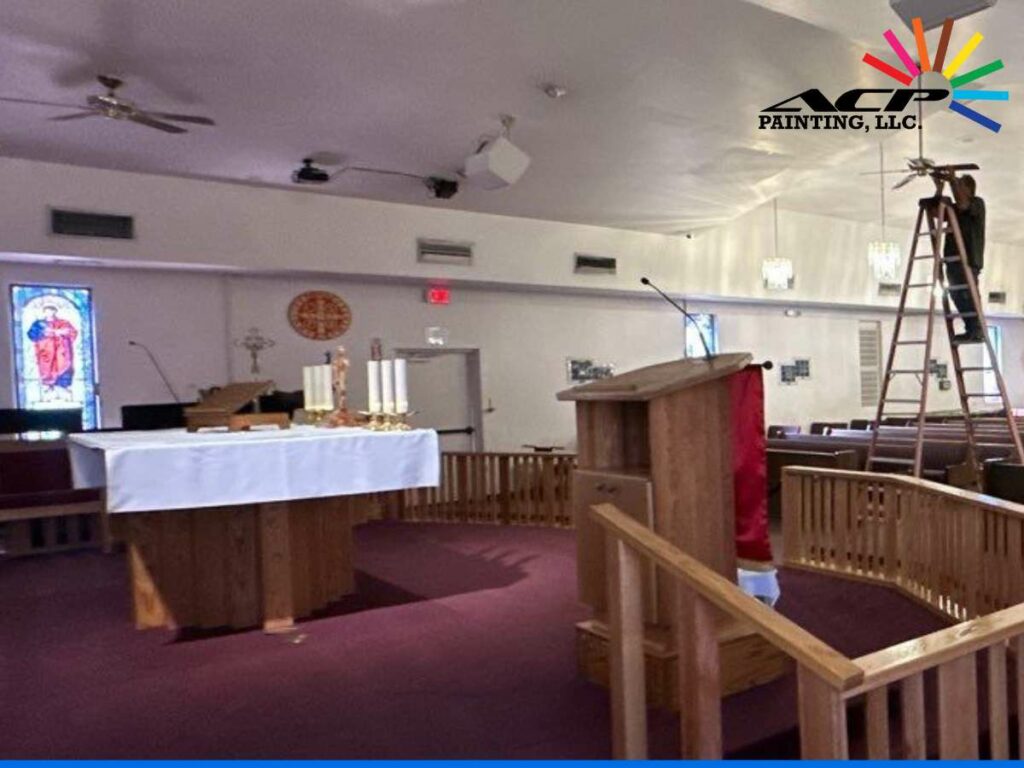
Another important thing to consider is the protection of the sacred elements and areas. Delicate and fragile items like stained glass, artwork, and pulpits require specialized coverings and barriers to prevent dust, splatter, or accidental damage.
Here’s a list of some of the most common materials used to protect delicate items during a painting project:
- Canvas drop cloths
- Plastic sheets
- Breathable fabric covers
- Foam padding
- Moving blankets
- Ram board
- Low-tack painter’s tape
- HEPA-filtered dust control sheets
Should Church Pews Be Covered Or Temporarily Removed During Painting?
If the church is not huge and the painting work is rather small, then you should be able to cover the pews with plastic (the same plastic used for other delicate items) with the help of the painting contractor. Nonetheless, deciding how to handle them depends mostly on access, timeline, and the scope of work.
Covering pews often works well when painting walls, ceilings, or trim with limited surface preparation. In that case, using heavy canvas drop cloths and breathable covers is the best way to protect wood finishes from paint splatter and debris while the crew work around fixed seating.
As for temporary removal, it makes more sense when the project is large and involves full church repainting. Removing pews becomes essential to improve access to walls and baseboards while supporting more consistent paint application.
Painting High Ceilings, Vaulted Areas & Elevated Surfaces Safely
Commercial painting the interior of large churches often involves navigating very high sanctuary ceilings; ceilings that are often way too high to tackle using just ladders. That’s why you must be careful when planning the painting job, as you must determine the safest and most efficient approach.
In this case, you’ll need to decide whether scaffolding or motorized lift equipment –or a combination of both– will be the best for safely completing the project.
Keep in mind that proper access equipment and safety protocols make all the difference. Scaffolding systems, boom lifts, and safety gear allow professional painters to work at consistent heights without risking uneven coverage or damage to sacred furnishing—or even worse, to a person.
Repairing & Preserving Walls, Ceilings & Architectural Features Before Painting
Before applying new coats of paint, you must repair any cracks, patches, or textured ceilings that require attention. These reparations set the foundation for long-lasting results in a church environment.
Ceilings and walls often show many years of wear from different elements, including humidity, candle soot, and temperature changes. That’s why addressing these issues becomes so important, as it prevents flaws from showing through fresh paint.
Let’s see how you can check these areas to see if they need repair or special attention:
- Check for visible cracks or separation lines along seams and arches
- Check for water stains or discoloration caused by leaks or moisture intrusion
- See if there’s any sign of flaking paint or bubbling in the walls
- If you see plaster delamination or soft spots, then it’s a sign of an unstable area that needs repair
- See if any sagging or uneven areas suggest structural stress
- Make sure the surfaces are clean of candle or incense staining
- See if there’s any mildew or mold growth, especially in poorly ventilated areas
- Lastly, examine light fixtures, vents, or speakers to see if they have any damage.
Spray vs Brush-and-Roll: Choosing The Right Application Method
Another thing to consider is whether the paint should be applied with an airless sprayer or by brushing and rolling it on. Many people are doubtful about letting painting contractors use paint sprayers on an interior project, but these professionals can use this method effectively without damaging the church’s interior.
In any case, each method has its place depending on the situation. For instance, spray application works well for large ceilings and expansive walls with few obstacles, while brush-and-roll methods work better for trim, doors, and detailed moldings.
Our best advice? Always ask the painting company to see the best approach for your church.
Evaluating Sanctuaries, Fellowship Halls & High-Traffic Areas
Areas like entryways, hallways, and community rooms often have the heaviest use. These high-traffic spaces are prone to stains and general wear, making them the first candidates for a refresh. If you ensure a durable finish in these areas, you’ll be able to keep your entire church looking clean for longer.
Remember that other areas of the church, like the sanctuary altar, may also suffer from constant damage due to their exposure to dust or humidity, especially if it includes high ceilings and architectural details. In essence, it’s best to mention this aspect to the professional painters to ensure the project will be successful.
Determining Interior vs Exterior Church Painting Priorities
It’s also crucial to determine painting priorities by understanding how interior and exterior conditions affect the church’s appearance and long-term protection. Exterior painting is usually a priority if the church’s surfaces show visible wear, peeling paint, or weather-related damage. This type of damage comes from constant sun exposure, rain, wind, and temperature shifts.
As for interior painting, it may be the top priority if you want to focus on visual impact and comfort. Fellowship halls, sanctuaries, and even interior offices experience daily use that leads to scuffs and uneven finishes, so it’s not surprising to consider them first to improve cleanliness and balance.
In the end, it all depends on your church’s needs, which is something you can also discuss with your painting contractor.
Setting a Realistic Church Painting Budget
Planning for Long-Term Durability & Reduced Maintenance Costs
If you want to ensure long-term durability, choose the right coatings and paints for each environment. Keep in mind that high-traffic areas benefit from washable finishes, while exteriors need stronger paints that resist UV rays and moisture.
With proper surface preparation and professional painters on your side, you’ll reduce touch-ups and extend the paint life of the church.
Prioritizing Key Areas When The Painting Budget Is Limited
A limited budget requires strategic and efficient decision-making. Areas with the most visibility and daily use, such as sanctuaries, entrances, and main hallways, usually receive the greatest impact when updated first. The same goes for spaces showing active deterioration or safety concerns.
When Volunteer Or Congregational Support Makes Sense & When It Doesn’t
Volunteer support works well for tasks like moving furniture, basic cleaning, or assisting with prep in low-risk areas, while complex work like painting high ceilings or specialized areas requires professional expertise and safety equipment. Be sure to contact the right one for each task–remember, you get what you pay for after all.
Choosing Colors & Finishes For Church Interiors
Color and finish choices shape how the church interior feels and ages over time, so be mindful of the color palette when painting it. Here’s what you should consider.
Creating a Color Palette That Supports Worship & Architecture
The color palette you choose should respect the spiritual purpose and architectural character. That’s why soft neutrals and warm tones often work so well, as they improve natural light without distracting from worship. Plus, these shades are excellent complements for stained glass, decorative items, and wood elements.
You can also add a bit of color (accent colors) through arches, alcoves, or focal walls, reinforcing the structure’s design rather than competing with it.
Selecting Durable Finishes For High-Traffic Church Areas
For high-traffic areas such as hallways, entryways, and fellowship halls, prioritize durable finishes. Satin or semi-gloss paints are ideal for these spaces; their resistance to scuffs and ease of cleaning help keep the area looking fresh and welcoming despite heavy use.
Preserving Faith, Function & Beauty With a Well-Planned Church Painting Project
A well-planned church painting project is more than just improving appearances. The idea is to protect sacred spaces, support daily function, and honor the history and purpose behind the building itself.
With thoughtful planning, you open the door to an efficient painting work that will respect worship schedules, preserve architectural details, and reduce long-term maintenance demands. Just remember to hire the right painters to guarantee the best results!
Why Professional Painters Are Often The Best Fit For Church Painting Projects
Working with a top-rated painting company in Maricopa, AZ is usually the best approach to avoid costly mistakes and premature repainting. Professional painters understand how to work around services and address the unique challenges of sanctuaries and high-traffic areas in a church. The result? An excellent environment that reflects care.
If you’re ready to work on your next interior or exterior painting project, contact ACP Painting now! We have a qualified team ready to evaluate your priorities and deliver a finish that honors your church’s purpose.