Best Paint And Colors For A Front Door That Faces The Arizona Sun
Guests are coming for the holidays, the front door looks tired, and you're leaning toward black or a deep navy. If that door faces west or south in the Phoenix Valley, choose the paint and the color with the sun in mind first. Masonite's own painting instructions warn that a door painted a dark color can get very hot to the touch in direct sunlight and may void the warranty.
The best paint for a front door in the Arizona sun is a premium exterior-rated paint from a professional line, in satin or semi-gloss: a 100% acrylic like Sherwin-Williams Emerald Exterior or Dunn-Edwards Evershield, or a urethane-modified door and trim enamel like Sherwin-Williams Emerald Urethane Trim Enamel or Dunn-Edwards Aristoshield. On a fiberglass or steel door that takes direct afternoon sun, stay in mid-tone and lighter colors, read your door maker's finishing instructions before you go dark, and get the color past your HOA before anyone opens a can.
We handle residential exterior painting from Maricopa to Scottsdale, and our crews work in Dunn-Edwards and Sherwin-Williams products, so those are the two paint lines this guide names. The door makers' rules below come from their published warranties and finishing sheets, with each document named so you can check your own door.
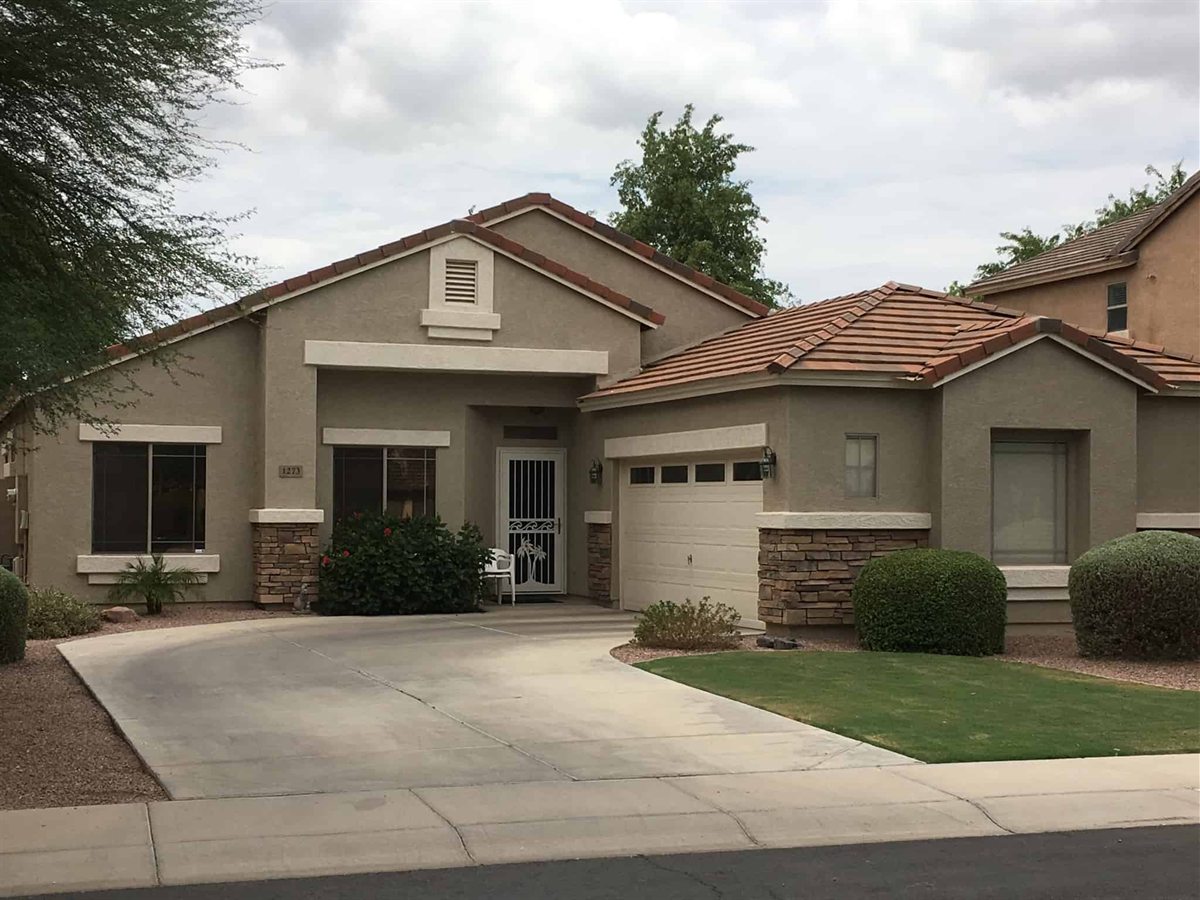
Key Takeaways For A Sun-Facing Front Door
- Paint: an exterior-rated 100% acrylic or a urethane-modified door and trim enamel, in satin or semi-gloss, over a clean, scuffed and properly primed surface.
- Color: on a door in direct west or south sun, mid-tones and lighter colors run cooler and hold their color longer. Dunn-Edwards says bold reds, blues, greens and yellows break down fastest in hot, dry climates like Arizona's.
- Warranty: Masonite, Therma-Tru, ProVia, Pella and JELD-WEN all put dark colors, direct sun or excessive heat somewhere in their paperwork, and only ProVia prints a number: an LRV of 57 or higher on painted frames and brickmold.
- Security Doors: Masonite says not to pair a storm door with a door painted a dark color, or to use one in areas of high heat or intense sun.
- HOA: Valley design guidelines often name the front door by itself, so check the palette before you buy paint.
What Is The Best Paint For A Front Door In The Arizona Sun?
The best exterior door paint for direct sunlight in Arizona is either an exterior-rated 100% acrylic or a waterborne urethane-modified enamel made for doors and trim, from a professional line, in satin or semi-gloss. The door makers point the same way. Masonite's painting guide calls for an "exterior grade 100% Acrylic, water based latex or solvent based product" and rules out lacquer, and Therma-Tru's finishing manual says to "use high-quality acrylic latex house paint" on its fiberglass and steel doors.
Which of the two fits depends on the door.
A 100% Acrylic Exterior Paint Usually Wins When:
- The door is fiberglass. Therma-Tru's FAQ warns that on its Smooth-Star fiberglass doors, paints labeled "interior/exterior" in many cases do not adhere well, and an exterior-only acrylic sidesteps that problem.
- You want the paint type the door makers name. Sherwin-Williams Emerald Exterior and Duration Exterior are both exterior-only acrylics, and Dunn-Edwards marks Evershield for doors in its satin, semi-gloss and gloss sheens, though not in its flatter ones.
- You can paint in the shade. The downside is heat: Sherwin-Williams' data sheets for Emerald Exterior and Duration both say "Do not paint in direct sun," and above 80°F the paint sets up quickly, which is how a big flat door ends up with lap marks.
A Urethane-Modified Door And Trim Enamel Usually Wins When:
- The door is steel and takes a beating from keys, hands and the dog. Sherwin-Williams rates Emerald Urethane Trim Enamel "for exterior use on doors, trim, and other small areas of wood or metal," and Dunn-Edwards lists metal doors among the uses for Aristoshield.
- You're choosing white paint for doors and trim. Our guide on why white trim and cabinets yellow in Arizona homes covers why oil-based alkyd paint ambers as it ages and why the trade moved white work to water-based enamels.
- You've checked the door brand first. Both of these enamels are sold as interior/exterior, which is the label Therma-Tru warns about on Smooth-Star. And neither is meant for the rest of the house: Sherwin-Williams says not to use its trim enamel on "the main body of exterior structures."
If you're repainting the stucco around the door too, our comparison of acrylic, elastomeric and ceramic exterior paint for Phoenix sun covers the walls.
What Sheen Should A Front Door Be?
Semi-gloss is the usual choice for a front door, with satin as the softer option. ACP's paint sheen guide for Arizona homes puts trim and doors in semi-gloss because they take knocks and fingerprints and a glossier film wipes clean. The tradeoff is that more sheen shows more of what's underneath, so a steel door with a few dings may look better in satin.
Dark Front Doors Run Hotter Because Low-LRV Colors Absorb More Sunlight
A dark front door runs hotter than a light one because a low-LRV color absorbs most of the sunlight that lands on it and turns it into heat, while a light color reflects more of it away. Lawrence Berkeley National Laboratory's Heat Island Group puts it simply: "Light-colored surfaces stay coolest because they strongly reflect both visible and invisible sunlight."
Light reflectance value, or LRV, is the number from 0 to 100 that tells you how much light a paint color reflects, where 0 is black and 100 is white. Sherwin-Williams lists it on each color's page. LRV only measures visible light, though, and LBNL notes that slightly less than half of sunlight is visible. That's why "cool-colored" materials exist: they stay moderately cool in a darker color by reflecting the invisible part. Sherwin-Williams builds its VinylSafe colors on that idea, but it ties them to vinyl siding and trim, and none of the door makers we checked mentions cool pigments as a fix for a dark door.
We didn't find anyone who has published surface temperatures for painted front doors, so the closest numbers come from roofs. In a 1998 report prepared for the EPA, LBNL wrote that a highly absorptive roof can run as much as 90°F above the air temperature on a summer afternoon, against about 20°F for a roof with a white coating. A door isn't a roof and doesn't face the sky all day. But a west-facing door takes the low afternoon sun almost straight on, during the hottest part of the day.
And the Valley gives that sun a lot of hot days to work with. The National Weather Service counts an average of 21 days a year at or above 110°F in Phoenix for 1991 to 2020, and 2024 set the record with 70. Exposure matters too: Dunn-Edwards notes that southern exposures receive the most UV light, which can mean the greatest color loss in paint, so a south-facing door takes the hardest UV beating of the four.
"I was appreciative of the time and care that went into prepping our home for paint. ... Up close, our house was chalky and crumbly - even the front door was rough. Now, it all looks fresh and new and we couldn't be happier."
Rochelle Bailey, Google review of ACP Painting Scottsdale, November 2025
More customer reviews from Valley homeowners are on our testimonials page.
What Fiberglass And Steel Door Makers Say About Dark Colors In Direct Sun
We checked the published warranties and finishing instructions from Masonite, Therma-Tru, ProVia, Pella and JELD-WEN. All of them put dark colors, direct sun or excessive heat in writing somewhere, none of them publishes a surface temperature limit for the door slab, and only ProVia prints an LRV number.
- Masonite: Its painting guide, How to Paint: Steel and Fiberglass Entry Systems, carries this warning: "Doors painted with dark colors or doors with attached non-vented storm doors may become very hot to the touch in direct sunlight and may void the warranty." Masonite's exterior door warranty excludes damage from a non-vented storm door "or excessive heat caused by intense sun exposure," and its care page says dark colors on a steel door "fade much quicker."
- Therma-Tru: The firmest dark color rule covers the plastic parts. Its warranty says PVC lite frames and simulated divided lite bars are "not recommended to be installed behind a storm door or to be painted dark colors, if exposed to direct sunlight," and the PVC frame label in its finishing manual says finishing in dark colors or installing behind storm doors "will void warranty." Its newer Durable doorlite frames are labeled as safe to paint a dark color, so check which frame your door has.
- ProVia: The only number we found. ProVia's warranty covers its PermaTech composite frame only if there's no storm door in the same opening and, if the frame and brickmold are painted, "the paint must have a LRV of 57 or higher (where 100 is white and 0 is black)." That rule covers the frame, not the door slab.
- Pella: Its fiberglass and steel entry door warranty says "Nonfactory finishing is not warranted," and it excludes products exposed to "excessive localized heat" along with fading from exposure to direct sunlight.
- JELD-WEN: Its finishing instructions say "If the door is exposed to direct sunlight, dark colored finishes may fade or deteriorate quickly and increase maintenance," and they call for a topcoat containing a UV inhibitor.
So on a sun-facing door, a dark color is a risk the door maker has already described in writing. If the door warps or the finish fails, expect the warranty conversation to start there.
New doors also come with a finishing deadline. Masonite says its entry doors must be finished within 45 days or the warranty is void, Pella allows 30 days from installation, JELD-WEN 30 days from purchase, ProVia 90 days for primed slabs, and Therma-Tru wants fiberglass finished within 6 months and steel within several days. Masonite is plain about the primer, too: "A primer coat is not a finish." A new door sitting in factory primer through the summer is already on the clock.
Warranty Terms, Coverage, And Duration Follow The Written Warranty Document. The Written Warranty Controls.
Does A Dark Color Void A Front Door Warranty?
It can, depending on the brand and the part of the door. Masonite warns that a dark door, or one behind a non-vented storm door, can get very hot in direct sun and "may void the warranty." Therma-Tru's dark color warning targets its PVC lite frames, and ProVia ties its frame coverage to paint with an LRV of 57 or higher. Read the warranty for your door before you pick the color.
Security Screen Doors Trap Heat Against A Dark Front Door
A security screen door over a dark front door can hold hot air in the gap between the two, and that heat buildup is the setup door makers warn about most directly. Masonite's support page says vented storm doors can be used on its fiberglass and steel entry doors "but should NOT be used in conjunction with doors painted or stained with dark colors or in areas of high heat or intense sun exposure," because a vented storm door "allows the trapped heat to escape." Therma-Tru says a properly installed and properly vented storm door won't void its warranty, but it isn't responsible for damage to its door "as a result of the storm door."
That guidance has a limit we should name. Door makers write about storm doors, which usually means glass, and a steel security door with open mesh lets more air through. None of the makers we checked addresses mesh security doors by name. So treat the storm door warnings as the closest written guidance you'll get, and keep a dark door behind a security door out of the hottest exposures.
The security door gets painted as a separate job. ACP's metal painting process starts with an industrial-grade metal primer made for the type of metal and finishes with an industrial-grade water-based alkyd urethane enamel, and electrostatic painting is offered for metal doors and frames.
Front Door Colors That Hold Up In The Arizona Sun
The front door colors that hold up best in Arizona sun are mid-tones and lighter colors in earthy, nature-inspired families: clays, terra cottas, sage greens, warm grays and off-whites. Dunn-Edwards explains why in Choosing Color Wisely: "Organic colors tend to fade more quickly than inorganic colors," and the bolder organic colors "such as reds, blues, greens and yellows" break down faster, which it says "is especially true in dry, hot climates, including Arizona and Nevada." The same article notes that darker hues absorb heat and that dark colors fade faster.
Sherwin-Williams Front Door Colors Ranked By LRV
Sherwin-Williams lists the LRV on each color's page, and as of October 2026 these front door paint colors land in this order, darkest first, rounded to the nearest whole number:
- Tricorn Black (SW 6258): 3
- Naval (SW 6244): 4
- Iron Ore (SW 7069): 6
- Fireweed (SW 6328): 7
- Indigo Batik (SW 7602): 8
- Urbane Bronze (SW 7048): 8
- Heartthrob (SW 6866): 11
- Positive Red (SW 6871): 11
- Gauntlet Gray (SW 7019): 17
- Cavern Clay (SW 7701): 20
- Retreat (SW 6207): 21
- Rojo Dust (SW 9006): 23
- Evergreen Fog (SW 9130): 30
- Accessible Beige (SW 7036): 58
- Antique White (SW 6119): 72
- Extra White (SW 7006): 86
The black, navy, bright red and deep blue doors all sit at 11 or below. The clays, rusts and sages land in the 20s and 30s, and only the light beiges and whites clear the 57 that ProVia sets for painted frames. Use the same LRV check on any exterior door paint colors you're weighing from other brands.
Black exterior door paint can work in Arizona if you put the door where the sun doesn't reach: a north- or east-facing entry, or a door set back under a deep covered porch. On a west door in Gilbert or Maricopa, a black at an LRV of about 3 absorbs nearly all of the visible light that hits it, and the door makers above have already said what they think of that. Swapping to a deep bronze or charcoal won't change much, since Urbane Bronze sits at 8 and Iron Ore at 6. The step that matters is moving up into the 20s. Front door colors for a white house have more room, since the contrast with white stucco does a lot of the work, but the sun rules don't change: a west-facing door still runs hot in navy.
What Color Front Door Goes With A Tan Stucco House?
The best front door colors for a tan house go a few shades deeper than the trim and keep the same warm undertone as the stucco. Clay, rust red and sage green all sit well against tan, and on Sherwin-Williams' scale they land in the 20s and 30s, so they run cooler in the sun than black or navy. Paint a large sample board, hold it against the wall in late-afternoon light, and check your HOA palette first.
Afternoon light shifts a color more than a store chip suggests, and our guide on how lighting affects paint colors explains why. If you'd rather not guess, ACP's free color consultation with an Arizona paint color consultant runs about an hour, and the consultant can scan the colors of a neighbor's home if you like their scheme.
Does Your HOA Have To Approve A New Front Door Color?
Usually, if the new color isn't already part of your approved scheme. Valley design guidelines often name the front door by itself, and published rules from Chandler, Gilbert and Sun Lakes show how much they vary:
- Sun Groves, Chandler: A repainted front door "may be chosen from any color from any builder in the Sun Groves Master Palette, or the 'Front Door Only' selections, or white, grey, wood tones or southwest desert colors." A new color scheme for the house needs written approval first, and the committee has 45 days to decide.
- Power Ranch, Gilbert: A Design Modification Application is required each time the home is painted, but repainting the garage, shutters or front door the same color doesn't need one. Colors can't be mixed between schemes, and security door frames should blend with or match the body, trim or door color.
- Cottonwood Palo Verde, Sun Lakes: Painted entry doors "must be painted the color of the house, trim or an HOA approved door color."
- Morrison Ranch, Gilbert: Screen doors and security doors "must be approved in advance in writing" by the Design Review Board, in a color that matches the house.
Our guide to getting your exterior paint job approved by your Arizona HOA walks through the paperwork, including the tip that local Dunn-Edwards and Sherwin-Williams stores keep many community color schemes on file. On exterior projects, ACP's color consultation works within the HOA's parameters.
"Glad we hired ACP Painting for stucco repair and exterior house painting. ... We appreciated their prompt communication to any questions or concerns and quick scheduling after HOA approval."
N Mazzo, Google review of ACP Painting in Maricopa, June 2026
Can I Repaint My Front Door The Same Color Without HOA Approval?
Often, but check first. Power Ranch in Gilbert says a same-color refresh of the front door needs no application, yet it wants one any time the whole house is repainted, even in the existing scheme. Sun Groves in Chandler doesn't require approval to repaint the original scheme. Read your design guidelines or call your management company before the crew shows up.
How To Prep And Paint A Factory-Primed Steel Or Fiberglass Front Door
Prepping a factory-primed steel or fiberglass door comes down to cleaning it, scuffing it if the maker says to, priming where the maker calls for it, and painting inside the temperature window on the data sheet. Door makers disagree on the details, so the finishing sheet for your door wins over any general guide, this one included.
- Find The Brand And Product Line. Therma-Tru says priming its Smooth-Star fiberglass doors is not necessary, while its Classic-Craft and Fiber-Classic doors get an alkyd or acrylic-based primer, and it wants a primer and paint that are compatible.
- Clean The Door. Masonite says to wipe steel and fiberglass doors with a solvent such as mineral spirits or acetone, then wash with a mild detergent in warm soapy water, rinse and dry. Therma-Tru calls for mild detergent and water or a TSP solution.
- Scuff Steel, And Check Before You Sand Fiberglass. Masonite says a steel door "must be lightly sanded with a 220-grit sandpaper," and JELD-WEN says to lightly scuff and sand the face and back of a steel door to improve adhesion. Masonite's fiberglass steps skip sanding, and JELD-WEN says not to use sandpaper on its Architectural fiberglass doors, while Sherwin-Williams' front door guide says to clean, sand and prime fiberglass. When the paint brand and the door brand disagree, follow the door brand.
- Prime Where The Door Maker Calls For It. On steel, Sherwin-Williams' system for Emerald Urethane Trim Enamel is one coat of All Surface Enamel Latex Primer and two coats of the enamel.
- Mask The Hardware, Glass And Weatherstripping. Therma-Tru and Masonite both say not to paint the weatherstrip.
- Paint Inside The Temperature Window, In The Shade. Masonite recommends 50°F to 90°F, Sherwin-Williams' SnapDry data sheet requires surface, air and substrate temperatures between 50°F and 90°F, and Dunn-Edwards' hot-weather bulletin says most latex paints shouldn't go on below 50°F or above 90°F. Sherwin-Williams also warns that above 100°F a paint film can dry before it adheres and peel later. Check the temperature of the door's surface as well as the forecast.
- Finish All Six Sides And Let It Dry Open. Therma-Tru says all doors must have all 6 sides finished, and Masonite says not to close the door until the paint is dry. If a coat needs a light scuff before the next one, Masonite says to follow the paint maker's recommendation and never sand the final topcoat.
Can You Paint A Metal Front Door Without Removing It?
Yes. Mask the hardware, glass and weatherstripping, paint early in the day while the door is out of direct sun, and leave it open until it's dry, since Masonite says not to close the door until the paint is dry. Sherwin-Williams suggests opening the door into the house to keep it out of the sun while you work. Emerald Urethane Trim Enamel lists a 4-hour recoat at 77°F.
Do You Paint The Edges Of A Front Door?
Yes. When painting a front door, paint the sides, top and bottom as well as the faces. Therma-Tru's finishing instructions say all doors must have all 6 sides finished, and on out-swing doors the sides, top and bottom get inspected and maintained as regularly as the faces. Masonite says all 6 sides must be sealed according to its finishing instructions, and JELD-WEN says to paint all sides of the door.
More Front Door Paint Questions For Arizona Homes
When Is The Best Time Of Year To Paint A Front Door In Arizona?
Paint a front door in Arizona between fall and spring, early in the day, while the door's surface sits inside the 50°F to 90°F window that Masonite and Sherwin-Williams' SnapDry data sheet both set. Phoenix averaged 21 days a year at or above 110°F from 1991 to 2020, according to the National Weather Service, so a summer repaint on a sun-facing door is a race against the surface temperature. If you want it done before holiday guests arrive, book it for October or November.
Is A Red Front Door A Bad Idea In The Arizona Sun?
Not a bad idea, but expect a bright red to fade faster than an earth tone. Dunn-Edwards lists "certain bright reds, blues and yellows" among the colors prone to ultraviolet deterioration, and bright reds sit low on the LRV scale too: Positive Red and Heartthrob both come in around 11. An earthier red like Rojo Dust, at 23, runs cooler and falls in the nature-inspired family Dunn-Edwards says holds up better.
How Dark Can A Front Door Go If It Gets Afternoon Sun?
There's no single number, and we found no door maker that publishes one for the door slab. The closest lines on paper are ProVia's LRV of 57 for painted frames and brickmold and Sherwin-Williams' rule against painting vinyl darker than its original color or below an LRV of 56 unless VinylSafe colors are used, and neither is written for a fiberglass or steel door. A reasonable working rule for a door in direct west or south sun is to stay at an LRV in the 20s or higher and save the single-digit colors for shaded entries. That's a judgment call, not a manufacturer rule, and it's your door.
Resources For Painting A Front Door In Arizona
- Sherwin-Williams: How To Paint A Front Door. A homeowner walkthrough that covers fiberglass doors and the best time of day to paint.
- Sherwin-Williams Emerald Urethane Trim Enamel. The product page and data sheet, with the exterior uses and the primer system for steel.
- Dunn-Edwards Technical Bulletin: Hot Weather Painting (PDF). The temperature limits and the follow-the-shade rule for painting in desert heat.
- JELD-WEN Finishing And Refinishing Instructions (PDF). Prep steps by door type, including which fiberglass lines can't be sanded.
- Therma-Tru Site Manual: Finishing (PDF). Therma-Tru's finishing steps by door line, plus the PVC frame labels that warn against dark colors.
Get Your Front Door Painted Before The Holidays
If you want the door done before guests arrive, call our Maricopa office at (480) 785-6323 or our Scottsdale office at (480) 764-3735, or request an estimate online. Tell us which way the door faces, what it's made of and whether a security door hangs over it. Those answers narrow the product and the color range before anyone picks a sample.
ACP Painting is veteran-owned and has painted Phoenix Valley homes since 2005.
About Russ Byers
Russ Byers co-founded ACP Painting in 2005 with his brother, Rob, and both are U.S. Army veterans. He's a co-owner of the company, which paints homes and businesses across the Phoenix Valley from offices in Maricopa and Scottsdale. Meet the ACP team.
Warranty Terms, Coverage, And Duration Follow The Written Warranty Document. The Written Warranty Controls.
ACP Painting, LLC.
20987 N John Wayne Pkwy
Maricopa, AZ 85139
Phone: 480-785-6323