Which Interior Paint Colors Keep An Arizona Home Feeling Cooler?
The west-facing living room hits four in the afternoon and the whole space feels ten degrees warmer than the rest of the house. You are wondering whether a different wall color would fix it. Part of that is a paint question, and part of it is not, so here's the honest split.
Cool colors have a real job in an Arizona home, and it helps to be clear about what that job is. Paint changes how a room reads: how bright it is, how much glare it throws, whether that afternoon light lands as golden or as harsh. What paint won't do is change the amount of heat coming into the house. Once you know which lever you're pulling, picking the color gets a lot easier.
We paint interiors across the Phoenix Valley, in Gilbert, Chandler, Mesa, Maricopa, Scottsdale and Ahwatukee, and this comes up in nearly every August color consultation. Here is how we work through it.
Do Interior Paint Colors Actually Make An Arizona Home Cooler?
No, not in any way your thermostat will register. Interior wall color has no measurable effect on cooling load, because the heat is not being generated inside the room. It's arriving through the roof, the windows and the walls from outside, and your paint is on the inside face of all of that.
The numbers show where the heat is actually coming from. The Department of Energy notes that in cooling seasons about 76 percent of the sunlight falling on standard double-pane windows enters the house as heat. That's the lever. Shade, window film, insulation and roof color move the bill. Wall color doesn't.
What color does change is worth having anyway. It changes perceived temperature, which is the sensation you're actually complaining about at four in the afternoon. It changes how much glare a sunlit wall throws back into your eyes. And it changes whether a room full of afternoon sun reads as bright and calm or as hot and yellow. Those aren't small things in a house that spends five months in triple digits.
"People call in July and ask what color will cool the house down. The truthful answer is that no color will, and I would rather say that than sell someone a repaint on a promise the paint cannot keep. What we can do is take the glare and the yellow cast out of the rooms that get hammered in the afternoon. Nine times out of ten the room that feels hottest is a west-facing room with a warm color on the sunlit wall, and changing that one wall changes how the room feels at four o'clock."
Russ Byers, Co-Owner, ACP Painting
Will Painting My Walls A Lighter Color Lower My Cooling Bill?
No, not in any amount your utility bill will show. Almost all of the heat in an Arizona house arrives through the roof, the windows and the walls from outside, and your interior paint sits on the inside face of that assembly. The Department of Energy notes that in cooling seasons about 76 percent of the sunlight hitting standard double-pane windows comes through as heat. Color changes how a room feels and looks, not what the thermostat reads.
"Not all hero's wear capes! Beyond happy with choosing ACP to paint the interior of my home. Rob, Roberto, Arturo and victor got the job done in one day and did a fantastic job. Julie came out to help me pick out a wall color and her insight was so helpful! Will 100% use again for future jobs."
Kelsi Sears Mesa, AZ Google review
The Two Things That Decide Whether A Color Reads Cool
Two properties do all the work: the undertone and the light reflectance value. Get both right and a room feels calmer in August. Get either wrong and the swatch that looked perfect in the store turns on you at three in the afternoon.
Undertone Is The Color Hiding Under The Color
An undertone is the base hue mixed underneath a neutral, and it decides which way that neutral leans in real light. Cool undertones are blue, green and violet. Warm undertones are yellow, orange and red. Two grays on the same chip card can read completely differently on your wall because one is a blue-gray and the other is a taupe-gray with yellow underneath.
In Arizona this matters more than it does almost anywhere else, because our light is intense and it swings hard from morning to evening. A warm greige that looks sophisticated at ten in the morning can go distinctly peach at five. Our guide on how lighting affects paint colors covers the mechanics in detail.
LRV Is How Much Light The Color Gives Back
Light reflectance value is a number from 0 to 100 that states how much light a color reflects, where 0 absorbs essentially all of it and 100 reflects essentially all of it. It's printed on the back of the color chip. A higher LRV bounces daylight around the room and keeps it from feeling closed in. A lower one absorbs light, which is why a dark wall in the sun warms up.
| LRV Range | How It Behaves In Arizona Light | Where It Works |
|---|---|---|
| 80 and up | Very bright. Can throw real glare off a sunlit wall. | Ceilings, trim, hallways with no direct sun. |
| 65 to 79 | Light and open, still soft enough to look at all afternoon. | Living rooms, kitchens, most main living space. |
| 55 to 64 | Mid-tone. Holds its color instead of washing out in strong sun. | South and west rooms that get hit hardest. |
| Under 40 | Absorbs most of the light. Warms up in direct sun. | Accent walls away from glass, media rooms, offices. |
What LRV Should I Look For In An Arizona Home?
For main living areas in Arizona, most homeowners land between 55 and 70. That range keeps a room bright without the glare a very high LRV throws off a sunlit wall. Go higher on ceilings, where bounced light is the whole point. Go lower in a media room or a north-facing office that never fights the sun. LRV is printed on the back of the color chip.
Which Rooms In An Arizona Home Need This Most?
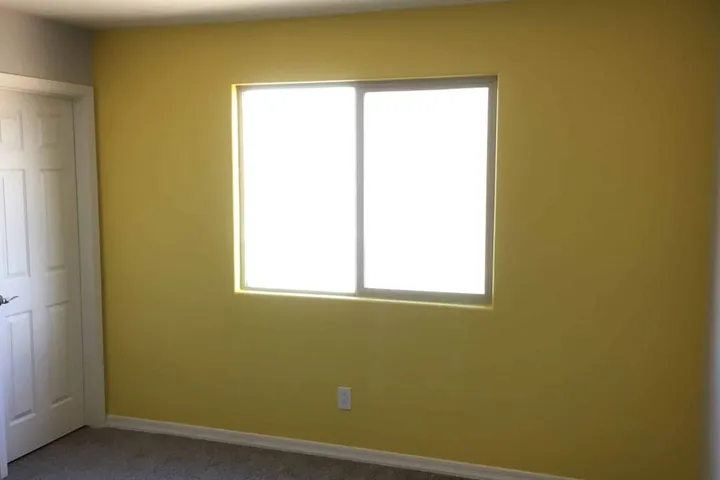
West-facing rooms first, south-facing rooms second. Those two take the most direct sun during the hottest part of the day, and they are where a warm undertone does the most damage to how the room feels.
The reason is the angle of the light. Sherwin-Williams describes the pattern: east-facing rooms get warm light in the morning and cooler light by evening, and west-facing rooms do the opposite. A west room takes low, direct, golden light for hours in the late afternoon, which is exactly when you notice the heat. Put a yellow-based beige on that wall and the room reads orange at the worst possible time.
North-facing rooms are the flip side and the reason a blanket rule fails. They get soft, cool, indirect light all day, and a cool gray in there can go flat and gloomy. That is the room where a warm undertone earns its place. Deciding these room by room, rather than picking one color for the whole house, is most of the job. If you are working with more than one color, our guide on using multiple paint colors in a room and the one on building a whole-home color scheme are worth reading before you buy anything.
What Color Should I Paint A West-Facing Room In Arizona?
Reach for a cool-leaning neutral: a gray, greige or soft blue-gray with a blue, green or violet undertone. West rooms take direct low-angle sun through the late afternoon, and that light pushes any warm undertone toward orange right when the room is hottest. Sherwin-Williams makes the same point about room orientation. Test the sample on the wall the sun actually hits, not the shaded one.
Ceilings And Trim Do More Work Than People Expect
A high-LRV ceiling bounces daylight down into the room and keeps the space from reading like a closed box, which is the single cheapest way to make a room feel airier without touching a wall color you already like. Crisp white trim does something similar at the edges, giving the eye a clean stop and making the wall color look deliberate.
If the room in question is also small, the two problems compound, and we worked through that combination in making a small room look bigger with paint. For the trim itself, choosing the right trim color covers how far from the wall color you want to go.
Where Dark Colors Still Work, And Where They Backfire
Dark walls are fine in Arizona. They just need to go on a wall the sun doesn't reach. A low LRV absorbs most of the light that lands on it, so a charcoal wall in direct afternoon sun gets warm to the touch and shows every scuff, roller lap and fingerprint under that raking light. The identical color on an interior wall reads deep and comfortable.
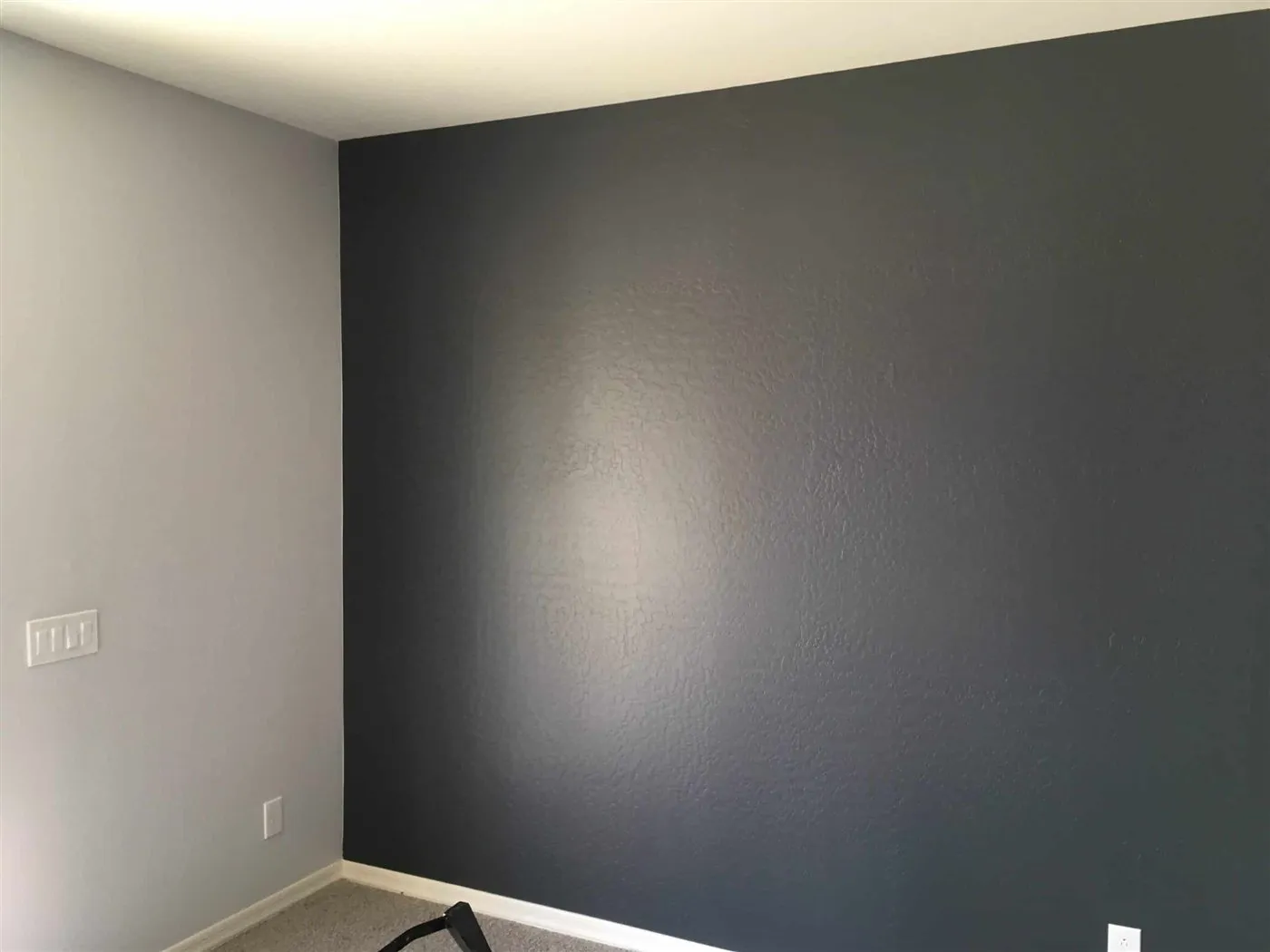
The wall in that photo is an interior wall with no direct glass on it, which is why it works. Pick your accent wall by the light it gets, not by which one faces the sofa. If the room is a home office, the calculation shifts again toward glare control on the screen, and we covered that in choosing home office paint colors.
Are Dark Accent Walls A Bad Idea In Arizona?
Not at all, as long as you put them on the right wall. A low LRV absorbs most of the light that hits it, so a dark wall in direct afternoon sun gets warm to the touch and shows every scuff and roller lap. The same color on an interior wall away from the glass reads rich and stays comfortable. Pick the wall by its light, not by the floor plan.
How To Test A Color In Arizona Light Before You Commit
Test on the wall that has the problem, at the hour that has the problem. Everything else about sampling is secondary to that. Here is the sequence we give homeowners.
- Paint A Board, Not The Wall. Two feet by two feet minimum, two coats, so you are seeing the real color and not the old wall bleeding through.
- Move It To The Wall That Gets The Afternoon Sun. A sample taped to the shaded side of the room is answering a question you didn't ask.
- Look At It Three Times. Mid-morning, around four in the afternoon, and after dark under your own lamps. Write down what you see each time.
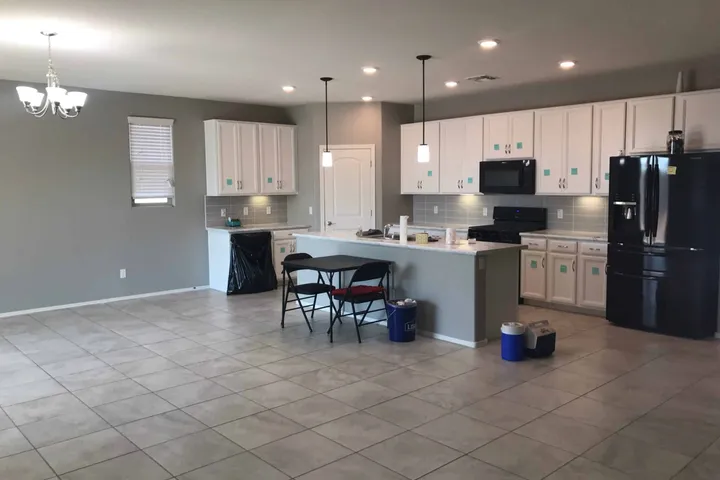
- Hold It Against The Floor And The Counters. Arizona homes are full of warm tile and travertine, and a cool gray can fight a warm floor badly.
- Check It Against The Trim You Plan To Keep. An existing off-white trim will pull the undertone of anything you put next to it.
Doing this properly takes a few days, which is why our free color consultation exists. A design consultant walks the house, reads the light in each room, and narrows a wall of chips down to a handful worth sampling. If you want a deeper session on a whole-home palette, that is our color consultation service.
How Big Should A Paint Sample Be Before I Commit?
At least two feet by two feet, painted on a board you can move rather than straight onto the wall. Look at it in the room at mid-morning, mid-afternoon and after dark under your own lamps. Arizona light shifts a color more than most people expect, and a two-inch chip under store lighting tells you almost nothing about how it will read at four in the afternoon.
"From setting up the initial appointment to the finish line, ACP Painting did a terrific job. Working with Scott, Elena and Christy answered all our questions. Julie the design consultant was great, picking out colors that were perfect."
Diane Kress Mesa, AZ Google review
No interior color will cool your house down. Cool undertones and a sensible LRV will take the glare and the yellow cast out of the rooms that get punished in the afternoon, which is the part you actually feel. Work west and south rooms first, keep warm undertones for the north-facing rooms that need them, put the dark color on a wall the sun never touches, and sample on a board at four in the afternoon before you buy five gallons of anything.
Summer is also the right season for this work, since interiors are the comfortable job while it's 110 outside. We covered the seasonal side in the best time to repaint a house interior.
ACP Painting has painted Phoenix Valley homes since 2005. We are a veteran-owned company run by two U.S. Army veteran brothers, licensed under AZ ROC #294240, and we use Dunn-Edwards and Sherwin-Williams products. See finished rooms in our interior painting gallery, read what homeowners said in our customer testimonials, or meet the family behind the company on our about page.
Call 480-785-6323, request a free estimate, or look through our residential interior painting service page. Financing is available if you'd rather spread the project out. We serve Gilbert, Chandler, Mesa, Queen Creek, Maricopa, Scottsdale, Ahwatukee and the surrounding Phoenix Valley.