
South-facing stucco in Maricopa starts showing the bill around year five. Color fade first, then chalking, then hairline cracks telegraphing through whatever’s on top. By the time a homeowner notices, the paint underneath has been failing for two summers. So the question that actually matters when you’re comparing contractor quotes isn’t which paint is best. It’s which paint matches what your house is doing right now.
This guide walks through the three exterior paint options most Phoenix Valley homeowners face: 100% acrylic latex, elastomeric coatings, and ceramic-modified products. It covers the conditions where each is the right call, where each fails when prep gets rushed, and the honest cost-versus-longevity math behind the choice.
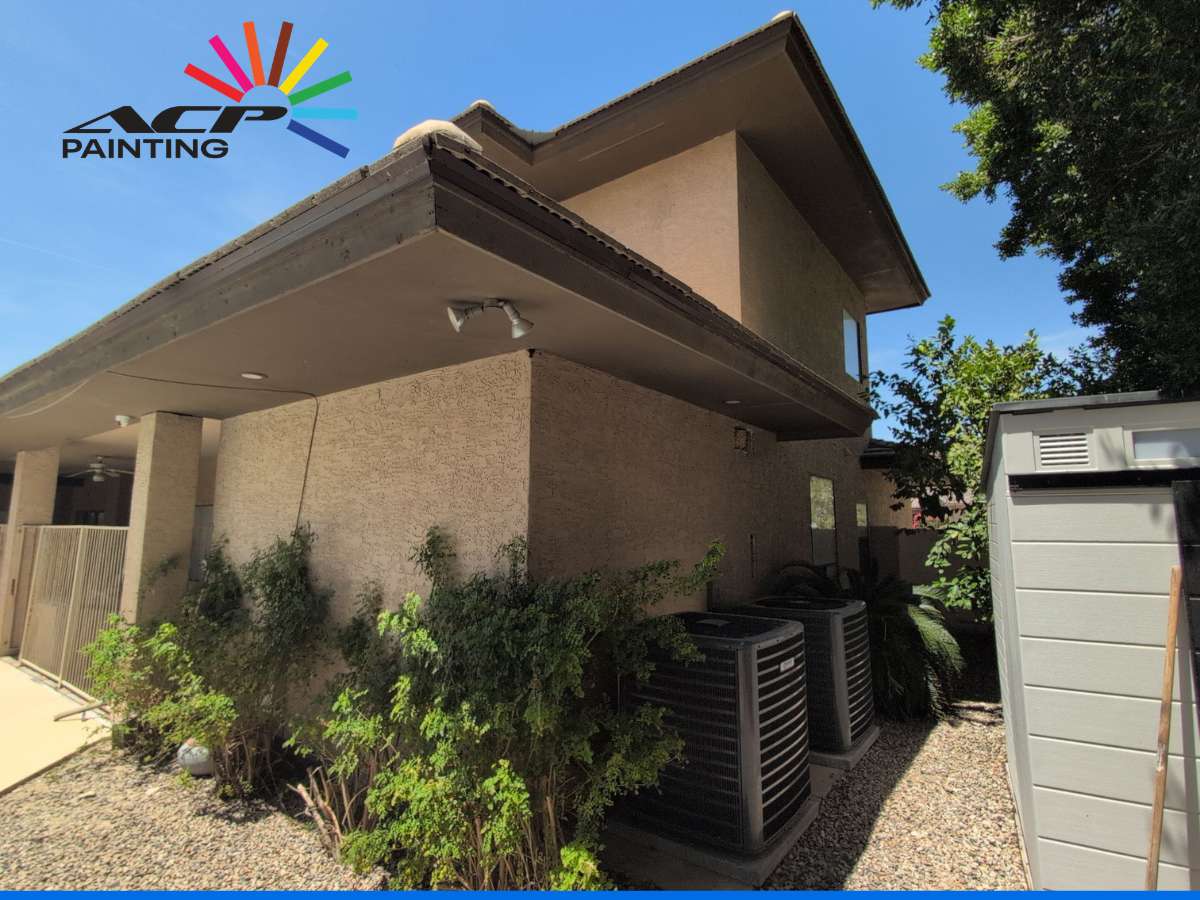
What Phoenix Sun Actually Does To Paint
Three forces work on your exterior at once. UV radiation breaks down the pigments and binders that hold paint together, and Phoenix logs more than 300 sunny days a year with some of the highest UV indexes in the country. Surface temperatures on south and west elevations reach 140°F or hotter in summer while overnight lows drop 50 degrees, so the wall expands and contracts every day. Then monsoon humidity hits walls that have been bone-dry for nine months, and the temperature swings move moisture in and out of stucco pores faster than paint film can handle.
That’s the problem your paint has to solve. Not “sun” in the abstract, but a specific cycle of UV, thermal movement, and monsoon moisture. Almost no national paint product is formulated against that cycle directly, which is why product selection in Phoenix is different from product selection in, say, Denver or Atlanta.
Acrylic: The Workhorse & Its Real Limits
100% acrylic latex is the right starting point for most Phoenix Valley exteriors. The acrylic binder stays flexible across temperature swings, breathes well enough to let trapped moisture escape, and resists UV better than older vinyl-acrylic blends. Two products own this category locally: Dunn-Edwards Evershield (the dominant pro-channel choice in Arizona because Dunn-Edwards is headquartered in Phoenix and formulates against southwestern conditions) and Sherwin-Williams Duration. Benjamin Moore Aura Exterior is in the same tier but harder to source locally.
Honest lifespan on a well-prepped Maricopa stucco repaint is 7 to 10 years on protected exposures and 5 to 7 on south and west walls with darker colors. Anyone promising 12 to 15 years is quoting manufacturer lab conditions, not real Phoenix performance. Darker colors absorb more UV-load and break down the binder faster, which is why dark south-facing walls fail first.
Prep matters more than which premium acrylic you pick. A mid-tier acrylic on proper prep outlasts a top-tier acrylic on rushed prep every time. If a contractor recommends a brand without telling you what surface preparation is included (pressure washing, crack repair, primer on bare stucco, masking, two coats), the brand recommendation is secondary information.
| “I just had ACP Painting LLC paint my house on the exterior. They used three paint colors. They repaired areas of the exterior that needed a boost. They did all the prep, repair, and painting in three days. They renewed my home’s exterior so it looks like a brand-new home.” — Gale Williams · 5/5 stars · January 2026 · Read on Google |
|---|
Elastomeric: Right For Some Walls, Wrong For Others
Elastomeric coatings are thick, rubbery films that stretch up to 300% of their original length and bridge hairline cracks in stucco. Sherwin-Williams Loxon XP is the spec product most Phoenix Valley contractors reach for. Its published Product Data Sheet lists 6.5 to 8.4 mils dry film per coat, 13.4 perms vapor permeance, and 350 psi tensile strength. It resists alkali up to pH 13, which matters because new stucco runs alkaline for months and conventional acrylic struggles against that pH.
The Tucson-based “Rosie on the House” column has taken a hard “never elastomeric in Arizona” position for years. The argument is that elastomeric traps moisture in walls that need to breathe, and once it fails, you can’t spot-patch it without recoating the entire wall. There’s truth to that on the wrong house. Pre-1990 hand-floated stucco with active moisture intrusion will hold water behind a thick elastic film and rot from the inside out. We have been called in to clean up those jobs.
Where elastomeric earns its premium is post-2005 Maricopa and Pinal County tract-home stucco that has developed hairline thermal-cycling cracks but has good drainage and a sound substrate. That’s the right job for Loxon XP. Wrong job (older stucco with hidden moisture issues, deferred crack repair, or a contractor who skips the masonry conditioner step before applying elastomeric), and the coating becomes a $4,000 mistake you’ll pay to remove before you can repaint properly.
For more on when elastomeric is the right choice, our elastomeric paint guide walks through the specific conditions in detail.
| “We’ve had a great experience from start to finish. We initially chose ACP because their quote process was thorough and straightforward and their pricing was competitive.” — Rochelle Bailey · 5/5 stars · November 2025 · Read on Google |
|---|
Ceramic-Modified Coatings: Read The Warranty
Ceramic-modified coatings like Rhino Shield mix microscopic ceramic spheres into an acrylic-elastomeric base. The microspheres add abrasion resistance and some heat reflection. The marketing claim is a 25-year warranty and reduced cooling costs from reflected heat. The warranty math is where the homeowner needs to slow down.
Ceramic-coating warranties typically exclude cracks from foundation settling, substrate failure, and “normal” thermal movement. That description covers most of the cracks Arizona stucco actually develops. Repairs require recoating entire wall sections rather than spot-patching, because the coating’s thickness and finish make blending impossible. Upfront cost runs three to four times a premium acrylic repaint.
The math works on a stable house you plan to own for 20+ years with settled construction and no foreseeable substrate issues. The math works less well on a tract home, a recently purchased property, or any house where you can’t predict whether you’ll be there in 12 years to claim the long tail of the warranty. We have seen homeowners pay the premium for a ceramic coating on a home they sold within five years. The next owner inherited the coating and the limitations on touch-up, and the warranty didn’t transfer cleanly.
Where Each paint actually fails in Phoenix
The jobs we get called into clean up cluster around three patterns.
Acrylic chalking on south elevations at year 5 to 6. Fine if the homeowner planned for an 8-year repaint cycle. A surprise if they were quoted “10 to 12 years easy.” Chalking shows up as a powdery residue when you wipe a hand across the wall. It’s UV breakdown of the binder, releasing the pigment. The paint is failing from the surface inward, and a fresh coat over chalked surface won’t bond properly. The repaint requires pressure washing and sometimes a chalk-bond primer first.
Elastomeric blistering when applied over stucco that wasn’t crack-repaired and primed properly. The elastic film holds, but the bond to the stucco fails. Blisters can be the size of a quarter or the size of a dinner plate, and they keep spreading once they start. The only fix is to remove the elastomeric, repair the substrate properly, and start over.
Ceramic-coating delamination on edges and corners where spray application was rushed and back-rolling got skipped. Ceramic coatings need both spray application for coverage and back-rolling for substrate penetration. Skip the back-roll and the coating sits on top of the surface rather than bonding into it. You see the failure at the edges first: corners of windows, parapet caps, transitions between wall sections.
The common shortcut that creates most of this cleanup work is single-coat exterior application to save the homeowner 20 to 25% on labor. Manufacturer specs are written for two coats. One coat saves money on the invoice and costs four years on the next repaint cycle. If a quote is meaningfully cheaper than two competing quotes, that’s usually where the difference is hiding. For more on what to watch for in exterior estimates, see our guide on budgeting for exterior house painting.
| “ACP Painting Scottsdale was outstanding from start to finish—professional, knowledgeable, and genuinely caring about the quality of their work.” — Stephanie McCarthy · 5/5 stars · February 2026 · Read on Google |
|---|
What to ask the contractor before signing
Four questions separate contractors who will deliver lifespan from contractors who will save you 20% upfront and cost you four years on the back end.
Which exact product and how many coats? “Premium paint” and “high-quality paint” aren’t answers. The quote should name the manufacturer, the product line , the mil thickness or coat count, and the specific prep included. Vague language is where the cost-cutting hides.
What surface prep is included? Pressure washing, crack repair, masonry primer, masking of non-paint surfaces, and chalk-bond primer on previously painted walls should all be itemized. If prep is one line item with no detail, that’s where the corners get cut.
What’s the written warranty, and is it the contractor’s or the manufacturer’s? Manufacturer warranties cover product defects only. Contractor warranties cover workmanship. The strongest combination is a contractor who offers a workmanship warranty on top of the manufacturer warranty, with clear language about what triggers it.
Has this house been tested for lead paint? Only relevant for homes built before 1978. The EPA Renovation, Repair, and Painting (RRP) Rule requires lead-safe practices on pre-1978 housing, and the prep work for an exterior repaint will disturb the existing coating. Contractors who aren’t certified for lead-safe work can’t legally work on these homes.
Frequently asked questions
How long does exterior paint last in Phoenix?
Premium 100% acrylic on well-prepped stucco lasts 7 to 10 years on protected exposures and 5 to 7 years on south and west walls. Elastomeric on the right substrate gets 10 to 12 years. Standard mid-grade paint shows chalking and fade within 3 to 5 years. The single biggest variable is prep quality, not paint brand.
Is elastomeric paint actually bad for Arizona stucco?
It depends on the stucco. On post-2005 tract-home stucco with hairline thermal cracks and good drainage, elastomeric extends life meaningfully. On older hand-floated stucco with active moisture issues, elastomeric can trap moisture and cause failure from underneath. A working painter should be able to tell you which category your home falls into during the estimate walkthrough.
Why do south-facing walls fade first?
They take more UV-hours per year and reach higher surface temperatures. UV breaks down pigment, heat accelerates the chemical reactions that fail paint film. South and west elevations on darker colors can fail two to three years before north-facing walls on the same house. If your home is showing fade only on the sun side, the rest of the exterior is on borrowed time.
What’s the most important question to ask my contractor?
“What’s the prep, and is it two coats?” Prep quality and coat count determine paint lifespan more than which premium product gets specified. A quote that’s noticeably cheaper than two others is usually skipping one or both. The difference between a 5-year and a 10-year paint job is usually $800 to $1,200 of prep work the cheaper quote left out.
The bottom line
Match paint to surface condition, not to ad spend. A well-maintained stucco home in Chandler, Gilbert, or Scottsdale repaints in 100% acrylic (Evershield or Duration) and gets 7 to 10 years if the prep is done right. A post-2005 Maricopa tract home with hairline cracking, good drainage, and a homeowner planning to stay put goes elastomeric with Loxon XP. Older stucco with moisture issues stays away from elastomeric entirely. Ceramic-modified coatings make sense only when you’ve read the warranty exclusions and the long-term ownership math works.
Talk to a Phoenix Valley exterior painting expert
Exterior paint selection looks simple from the outside: pick a brand, pick a color, get it on the walls. The trouble is in the application. Which substrate condition you’re working with, which prep your contractor is actually doing, which manufacturer warranty terms apply, and whether the per-year math favors the premium product or the workhorse acrylic. If you’re getting bids on a Phoenix Valley exterior repaint and the quotes are spread across $4,000 of price difference, our team can walk you through the assessment and help you understand where the spread is hiding.
Call our Maricopa office at 480-785-6323 or request a free in-home estimate. We serve homeowners across Maricopa County and northern Pinal County from offices in Maricopa and Scottsdale, with crews working in Ahwatukee, Chandler, Gilbert, Tempe, and Casa Grande.
For more on our exterior painting work, visit our residential exterior painting service page, or browse our exterior painting gallery for examples of completed Phoenix Valley jobs.
| About the Author Russ Byers — Co-Owner & Master Painter, ACP Painting, LLC Russ has been working Phoenix Valley exteriors for 20+ years. ACP Painting is a veteran-owned business serving Maricopa County and northern Pinal County since 2005, licensed under AZ ROC #294240 (CR-34). Read more about our team |
|---|
Related reading
Elastomeric Paint: When Is the Right Time to Use It?
A deeper walkthrough of the conditions where elastomeric coatings earn their premium versus where they cause more problems than they solve. Covers Loxon XP specifically and the prep requirements that determine success.
7 Tips for Maintaining Your Stucco Exterior
The maintenance practices that extend exterior paint life regardless of which product you choose. Annual rinses, gutter management, and crack monitoring all matter.
8 Signs Your Home’s Exterior Needs Painting
How to read your existing paint to decide whether you’re at year 5 of a 7-year cycle or year 7 of a 5-year cycle. Visual indicators that tell you the cycle is closing.
How Often Should You Paint Your House Exterior?
The cycle question answered for Phoenix Valley specifically. Different from national averages because of the UV and thermal-cycling load.
How to Budget for Exterior House Painting
What goes into the per-square-foot pricing and which line items are negotiable versus essential.
Service areas
Whole-home exterior repaints for Phoenix Valley stucco homes, with prep, primer, and two-coat application standard.
Drywall & Stucco Repair and Painting
Surface repair before paint, the prep work that determines whether your repaint lasts 5 years or 10.
Color selection assistance, including LRV considerations for Phoenix sun and HOA palette matching where applicable.

Maricopa
20987 N John Wayne Pkwy
Maricopa, AZ 85139
Phone: 480-785-6323
Scottsdale
8350 E Raintree Dr Ste 215,
Scottsdale, AZ 85260
Phone: 480- 764-3735