How to Paint Concrete Block Walls in Arizona (Without the Paint Peeling)
A painted block wall in the Phoenix Valley either looks sharp for years or starts flaking within two summers. The difference is almost never the color. It’s the prep, the primer, and whether the paint was made for masonry in a desert climate.
Block fence and CMU walls are everywhere here, and they take a beating: direct UV, single-digit humidity, monsoon moisture, and salts pushing out of the block. The generic “5 steps to paint a block wall” guides online are written for mild climates and skip what actually decides whether your wall holds up in Arizona. If you’re still deciding whether to paint at all, we cover that in 3 reasons to paint concrete block walls. This is how to do it so it lasts.
Why Block Walls Fail Here (and Most Guides Miss It)
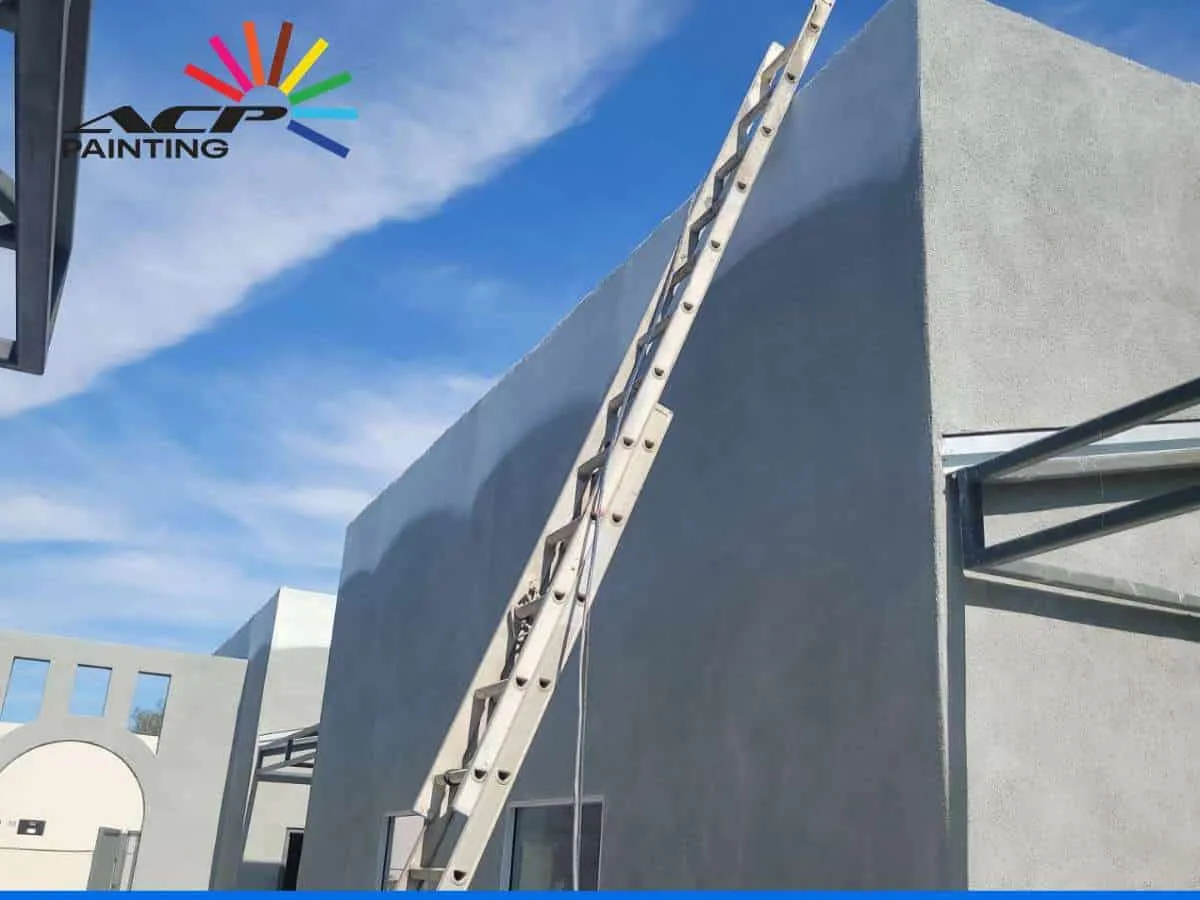
Concrete block is porous and alkaline, and those two facts drive almost every failure we see. Porous means the block drinks paint: roll a standard exterior straight onto bare block and the pores pull it in unevenly, leaving pinholes and thin spots. That’s why bare or patched block needs a block-fill primer, a thick masonry primer that seals the pores and gives the topcoat a uniform surface to grip.
Alkaline is the part national guides skip. Concrete releases lime and mineral salts, and when moisture moves through the wall and evaporates it leaves a chalky crust called efflorescence that lifts paint from underneath. Block walls deteriorate primarily from moisture, natural or from irrigation, which is why ACP treats water-affected areas with a masonry primer-waterproofer like DryLok before the finish coats. On a desert fence that moisture comes from sprinklers, irrigation beds, and monsoon rain hitting an unsealed top course. Paint over active efflorescence and you’ve built in a failure; brush off the salts, stop the water, and let the wall dry fully first.
How to Paint a Concrete Block Wall, Step by Step
1. Clean the wall and let it dry
Pressure wash to strip dust, chalk, and any loose paint, keeping it under about 2,000 PSI on bare block (2,500 on previously painted) so you don’t gouge the block or erode mortar joints. Washing drives water into the pores, so give the wall two to three dry days before painting, and don’t rush it after monsoon rain.
2. Repair cracks and stop the water
Seal cracks 1/16 inch or wider with elastomeric or polyurethane masonry caulk; an open crack channels water behind the paint and lifts it. Larger cracks or crumbling block need real patching, not caulk. Fix the moisture source too: redirect sprinklers off the wall and seal the top course. It’s the same prep discipline as stucco exteriors, since both are porous masonry.
3. Prime with a masonry block filler
On bare or patched block this is non-negotiable. A block-fill primer seals the pores and creates the uniform base the color coat needs, and skipping it is the most common reason a DIY wall flashes and peels early. A sound, previously painted wall may only need repairs spot-primed, but bare block always gets primed, and water-affected sections get a masonry primer-waterproofer like DryLok first.
“I felt like they went further than many other companies would by pressure washing, priming the base of the house and wall then painting. Everything was covered to protect from overspray including the pool and plants.”
Andy Schmitt. Scottsdale exterior and perimeter wall, verified Google review.
4. Apply the paint, two coats
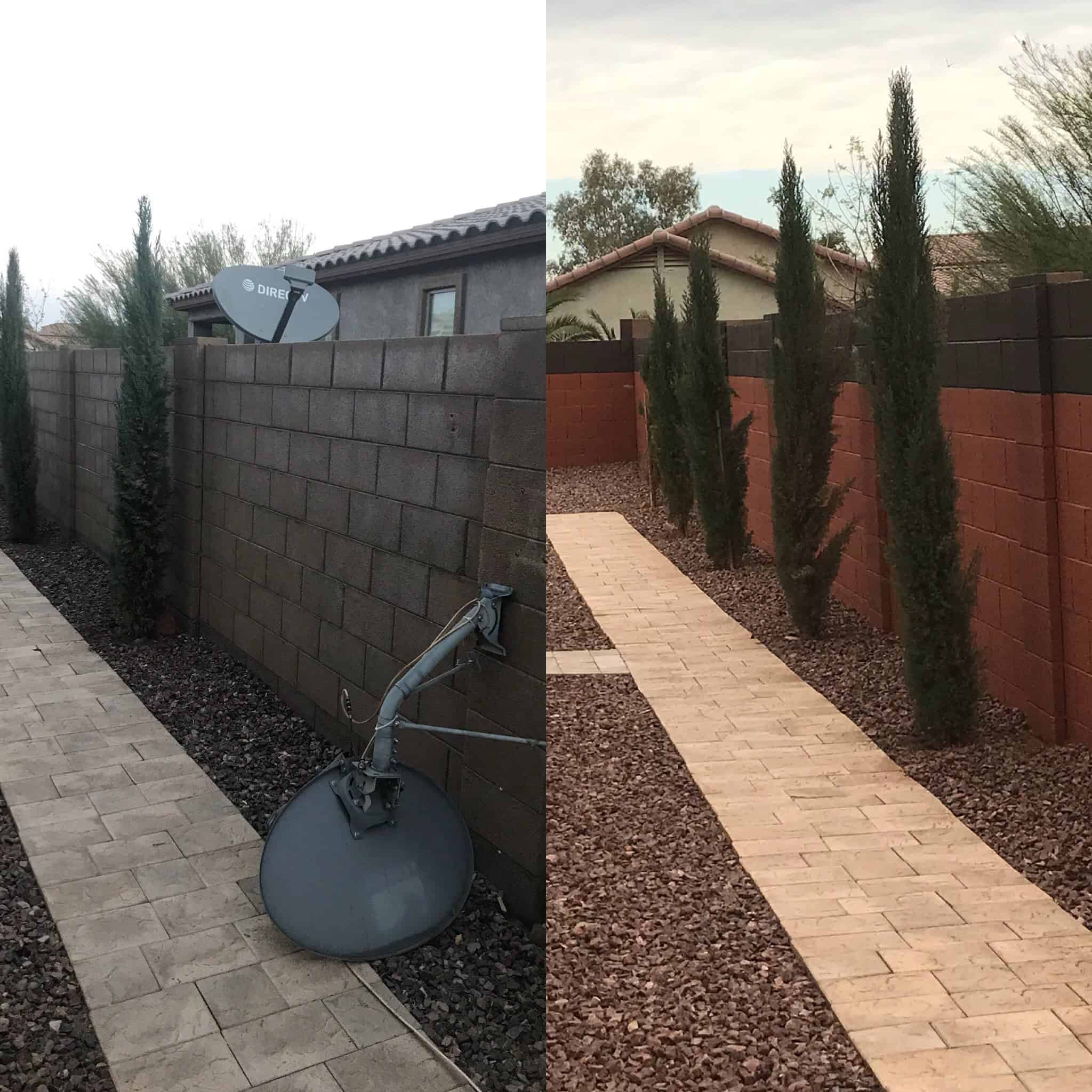
Work the paint into the texture rather than laying it across the surface. ACP’s crews spray and back-roll, rolling right behind the sprayer so the coating is pushed into the pores; a thick-nap roller alone works on shorter walls. Plan on two coats for true coverage on masonry, more on thirsty split-face block. One honest note: even a perfect job won’t hide the mortar joints, that’s the nature of painted block, not a workmanship issue.
Choosing the Right Paint for an Arizona Block Wall
For exterior masonry here the two workhorses are a true elastomeric coating, which is thick and flexible and bridges hairline cracks through big desert temperature swings (Dunn-Edwards’ Enduralastic line is one example), and a premium masonry acrylic, easier to recoat and great on walls without much cracking. ACP’s crews are manufacturer-trained on the systems built for this climate, including Dunn-Edwards Evershield and Sherwin-Williams Loxon. For the primer, an alkali- and efflorescence-resistant product like Dunn-Edwards EFF-STOP suits the high-pH block here. Avoid builder-grade flat exteriors with no masonry rating, and skip “paint and primer in one” on bare block, it’s no substitute for a real block filler. Matching a durable product to a specific color is what our free color consultation is for, since a chip can’t show you how a color reads on the actual wall in Arizona light.
Timing It Around the Heat and Monsoon
This is the section a national DIY guide can’t write. Watch the surface temperature, not the air. A block wall in direct sun runs 20 to 40 degrees hotter than the air, so a “mild” 95-degree afternoon can put the surface past 130. Most masonry paints are rated up to roughly 90 degrees of surface temp; past that the paint flash-dries and skins over before it can bond, giving you lap marks and early failure even when the prep was right. So timing matters: the reliable windows are roughly October into November and March into April, daytime temps in the 65 to 85 range. Summer means starting at sunrise and chasing shade around the wall, and monsoon season (July into September) adds dust and humidity that ruin a fresh finish. When a wall is already failing, the move is to work the clock, shaded faces early, off the sun-baked side before it bakes, not to ignore the surface temp and hope.
HOA Approval, Color Rules, and Graffiti
Two local realities national guides never mention. Most Phoenix Valley master-planned communities require written HOA approval of your wall color before you paint, even for a similar shade; paint first and you can be ordered to repaint at your own cost. Pull your approved palette early and keep the sign-off. We walk through it in how to get your exterior paint job approved by an Arizona HOA.
And block walls along alleys and busy streets are graffiti targets. If that’s a concern, an anti-graffiti or sacrificial clear coat lets tags wash off without stripping your paint, worth specifying up front rather than after the first hit.
“We hired ACP Painting to paint our back wall and they absolutely rocked it. Elijah and Michelle took their time and made sure our wall was absolutely perfect. Their prices were extremely competitive, less than we originally thought. Our original wall was tan; new color is Iron Ore by Sherwin Williams.”
Teresa Hamilton. Maricopa block wall repaint, verified Google review.
Quick Block-Wall Checklist
- Pressure washed under ~2,000 PSI, with two to three dry days before painting?
- Efflorescence brushed off and the moisture source (sprinklers, top course) stopped?
- Cracks sealed, and bare or patched block primed with a block-fill masonry primer?
- Elastomeric or premium masonry acrylic, UV-stable, and surface temp under ~90°F in the right season?
- Color HOA-approved in writing?
Frequently Asked Questions
Do I need to prime a concrete block wall before painting?
On bare or patched block, yes, with a block-fill masonry primer, not a paint-and-primer-in-one. Block is porous and alkaline, so it pulls paint in unevenly and can push salts back out. A masonry primer seals the pores and gives a uniform base; skipping it is the most common reason a wall flashes and peels early. A sound, previously painted wall may only need repairs spot-primed.
What kind of paint is best for an exterior block wall in Arizona?
A true elastomeric coating or a premium 100 percent acrylic masonry paint, both UV-stable. Elastomeric is thick, flexible, and bridges hairline cracks through big desert temperature swings; masonry acrylic is easier to recoat later. Avoid builder-grade flat exteriors with no masonry rating, which chalk and fade fast on sun-blasted walls. See the scope of our residential exterior painting work for context.
Why is my painted block wall peeling or turning white?
The chalky white crust is efflorescence, mineral salts pushed out of the block by moisture, and it lifts paint from underneath. It usually traces to irrigation hitting the wall, monsoon water in an unsealed top course, or paint applied before the block dried. Stop the water source, brush off the salts, let the wall dry fully, and repaint with proper masonry primer. Painting over active efflorescence just rebuilds the failure.
Do I need HOA approval to paint my block fence wall?
In most Phoenix Valley communities, yes, in writing, before you paint, even for a color close to the original. Painting first can result in an order to repaint at your own expense. Pull your approved palette early and keep the sign-off. Here’s the Arizona HOA approval process in full.
How long will a painted block wall last in Arizona?
With proper prep, the right masonry product, and correct-temperature application, an exterior block-wall repaint commonly holds up for several years to roughly a decade, with sun-facing sides aging fastest under desert UV. Early failures almost always trace to skipped priming, trapped moisture, or hot-surface application rather than the paint itself. ACP backs its workmanship with up to a 10-year warranty. Outcomes vary with surface condition and exposure.
Does ACP paint block fence walls and perimeter walls?
Yes. Block fence walls, perimeter walls, and CMU building walls are regular work for us across Maricopa, Scottsdale, and the Phoenix Valley, including crack repair, masonry priming, and graffiti-resistant coatings. Reach us through the contact page for a free estimate.
Your Next Step
A block wall is one of the cheapest ways to sharpen a property, and one of the easiest to get wrong if the prep and product aren’t right for the desert. ACP Painting has painted exterior and block walls across Maricopa, Scottsdale, Chandler, Gilbert, Tempe, Ahwatukee, and the surrounding Phoenix Valley for over 20 years. We’re a veteran-owned business licensed under AZ ROC #294240, hold a 5.0 Google rating, and back our work with up to a 10-year workmanship warranty.
Call us at 480-785-6323 or request a free estimate and color consultation. We’ll look at the wall, flag what actually needs doing, and give you a straight number.
Project outcomes vary based on existing surface condition, substrate type, and environmental factors. Final color selection should be tested with paint samples on the actual surface and viewed in your wall’s specific lighting before committing to the full repaint.

Maricopa
20987 N John Wayne Pkwy
Maricopa, AZ 85139
Phone: 480-785-6323
Scottsdale
8350 E Raintree Dr Ste 215,
Scottsdale, AZ 85260
Phone: 480- 764-3735