How to Make a Small Room Look Bigger With Paint: 6 Ways That Actually Work.
A small room feels cramped because of the visual cues your brain reads: hard contrast at the corners, a low ceiling line, and walls that absorb light instead of bouncing it. Paint is the cheapest way to erase them.
You’re not adding floor space; you’re changing how your eye measures the room. Below are six paint moves our crews use on real interior painting jobs across the Phoenix Valley, each aimed at a specific cue that says “small.” The last one decides whether the other five land or backfire.
Why Small Rooms Feel Small in the First Place
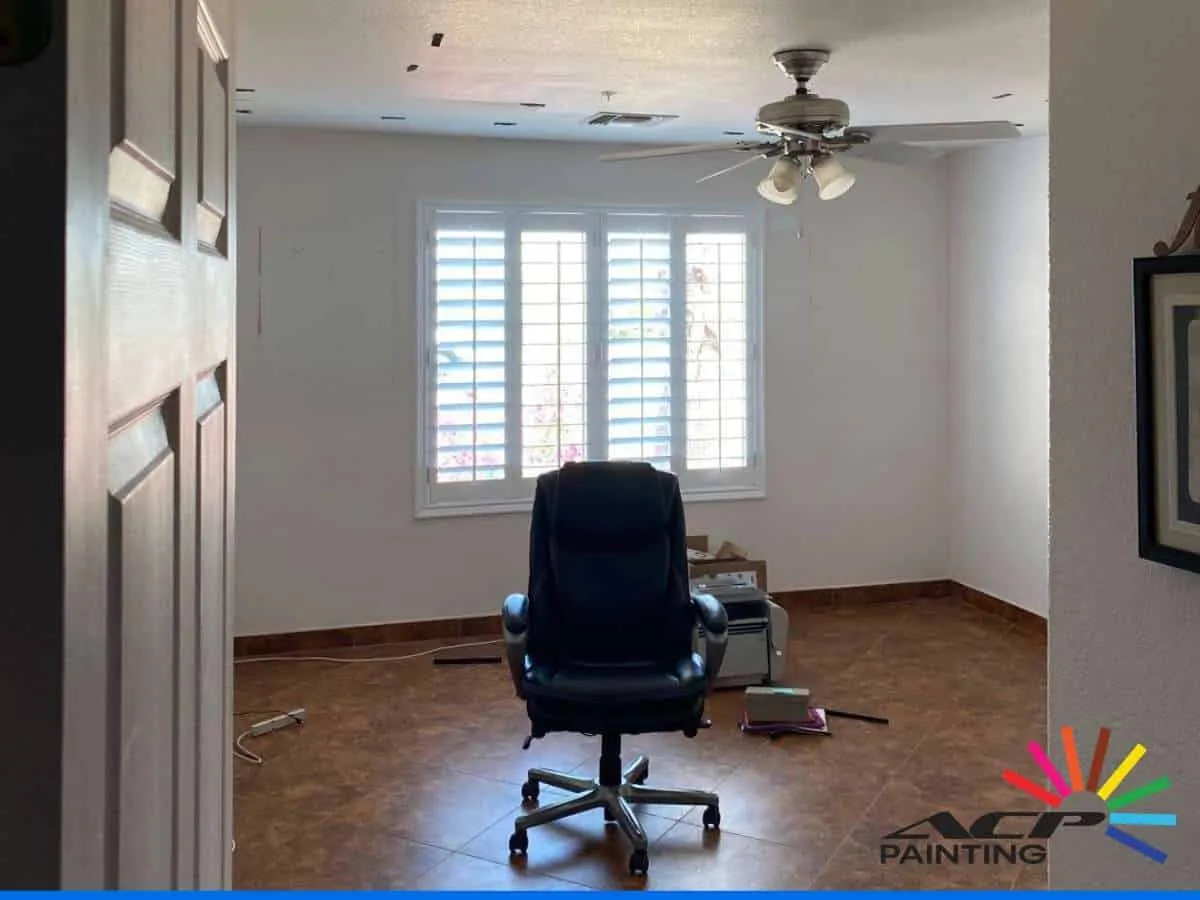
Three things make a tight room feel tighter. Dark, heavy walls pull inward. A ceiling that contrasts sharply with the walls drops the perceived height. And surfaces that swallow light flatten the room so the eye can’t find depth. Every trick below targets one of those three: you’re either bouncing more light, lifting the ceiling, or giving the eye somewhere to travel.
Color does most of this work because it controls how much light a surface returns and how the brain reads the psychology of a space. Two rooms of identical size can feel completely different the day after they’re painted.
“We had the ceilings, walls and all trim painted. ACP Painting was very professional, responsive and they provide a full service experience including a color consultation. The job they did was fabulous. They sanded where needed, filled holes and their edges are very crisp. I’m a stickler for clean lines.”
TraciM Maricopa, AZ · Google review
1. Bounce More Light With White or a Light Neutral
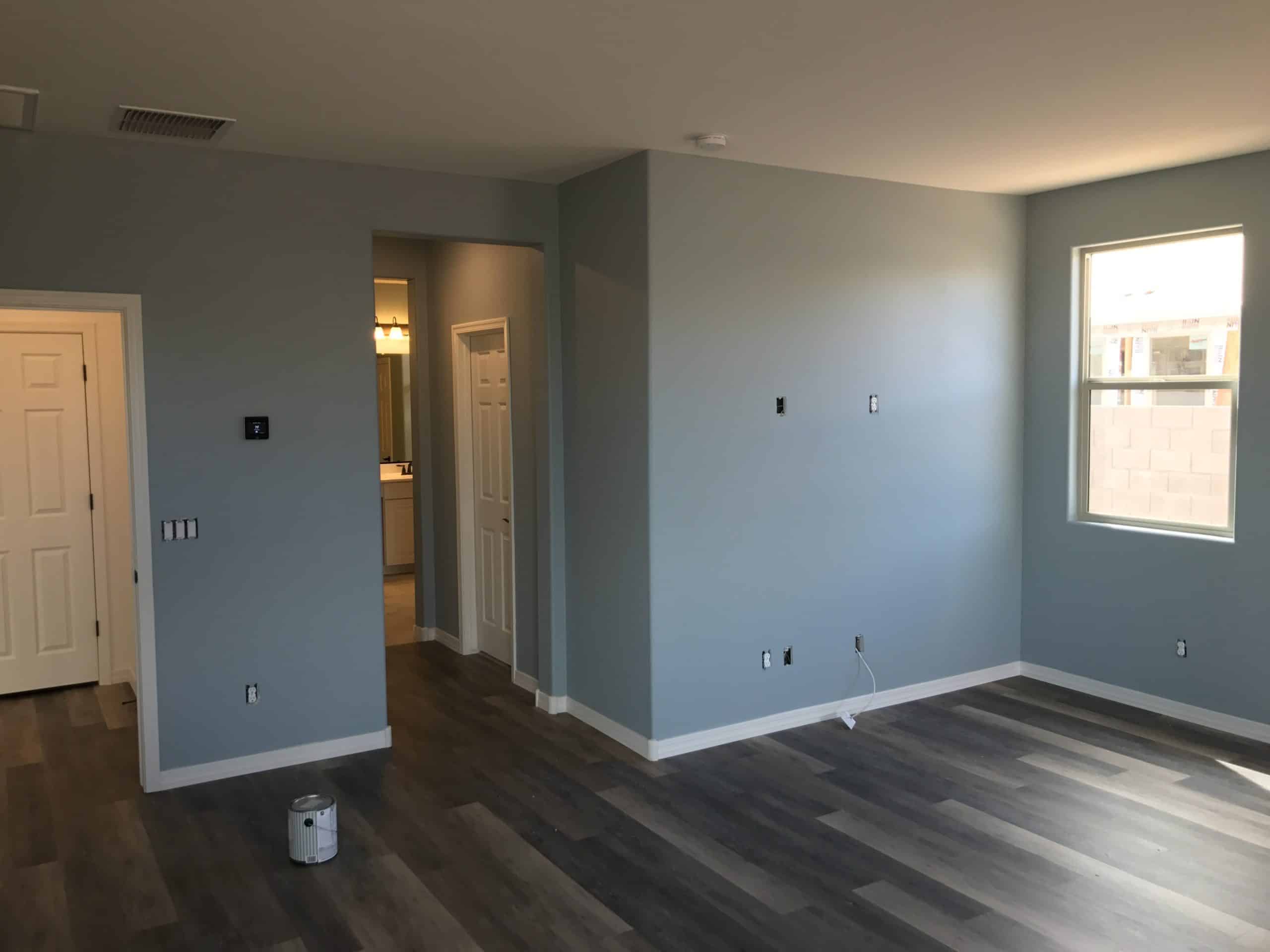
The most reliable way to open a small room is a color that reflects light instead of absorbing it. A soft white or pale neutral throws daylight back, softens the corners, and pushes the walls outward in your eye. In a Valley bedroom with one window, this usually beats everything else here.
Undertone is where people slip. Our Arizona sun is intense, and south- and west-facing walls take the worst of it, which is where sun-faded elevations show up across the Valley. That light exaggerates whatever base a white is built on. A green or gray undertone can go cold and flat by mid-afternoon; a warmer white stays inviting all day. Here’s why lighting shifts how every color reads more than most homeowners expect.
Our crews are manufacturer-trained applicators on Sherwin-Williams, Dunn-Edwards, and Benjamin Moore lines, so the pick comes down to the room, not the label. Warm whites that hold up indoors:
- White Dove (Benjamin Moore). Soft and forgiving in low light.
- Off-whites like Alabaster (Sherwin-Williams). Clean and creamy without reading stark.
2. Go Dark on Purpose, Not by Accident
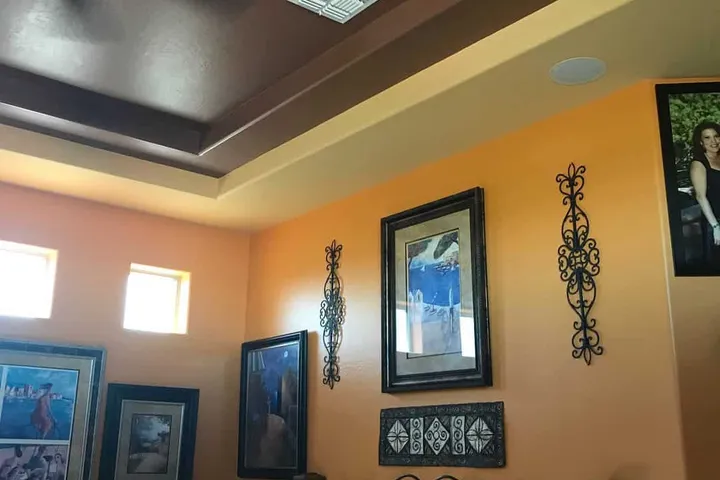
Light isn’t the only way to win. A deep, saturated color can make a small room feel intentional and layered, and dark walls blur exactly where the wall stops, which reads as depth. The difference between cozy and cramped is two things: the undertone has to agree with your light and trim, and the sheen has to suit the surface.
Get either wrong and the room closes in. A muddy mid-tone reads as simply dim, while a true charcoal or near-black often behaves better in a small space. The margin for error is thin here, so this is where a quick color consultation pays for itself before you’ve opened a can.
3. Give the Eye a Focal Point With One Accent Wall
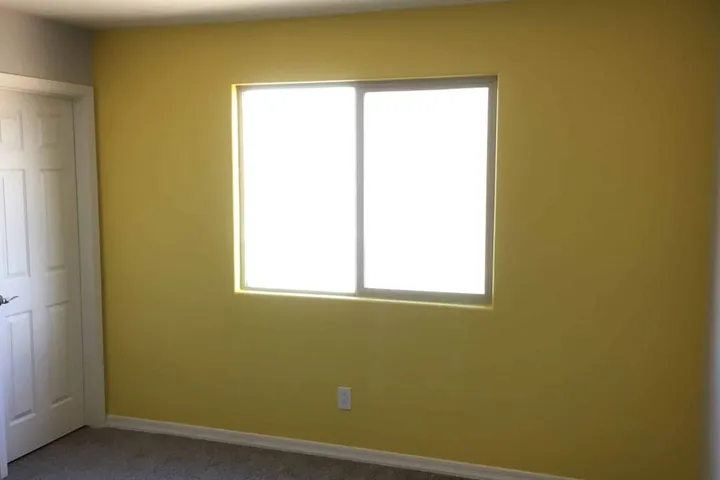
If painting the whole room dark feels like a gamble, an accent wall gives you most of the depth with far less risk. A single contrasting wall creates a focal point that makes a room feel deliberate, and it tells you where the bed or sofa wants to sit, which keeps a small room from feeling cluttered.
The catch is choosing the right wall and a color that cooperates with the rest of the room. The wrong pick undoes the effect, so review the common accent-wall mistakes before you tape anything off. Done right, an accent wall does the work of a whole-room repaint at a fraction of the commitment.
4. Use Pattern to Pull the Eye Upward
Flat color isn’t your only lever. A wide vertical stripe draws the eye up and makes a low room feel taller. Keep it to one wall and keep the stripes wide; thin stripes across every wall make a small room feel busy. If stripes aren’t your thing, a small-scale pattern in one spot adds interest without crowding the room.
5. Lift the Ceiling by Keeping It Lighter Than the Walls
The ceiling is the most-ignored surface in a small room, and that’s a mistake. A ceiling painted lighter than the walls reads as higher and lifts the whole space. If your walls run dark, an off-white or pale gray overhead keeps the room from feeling like a sealed box.
A soft, cool tone overhead can stretch the sense of height, and crown molding pulls the eye upward too. One rule holds: a dark ceiling can be striking, but it almost never makes a room feel bigger. Plan the ceiling, walls, and trim colors as a set rather than one at a time. Layering more than one color well is its own skill, covered in our guide to using multiple colors in a room.
“From setting up the initial appointment to the finish line, ACP Painting did a terrific job. Julie the design consultant was great, picking out colors that were perfect. We absolutely love how this turned out!”
Diane Kress Maricopa, AZ · Google review
6. Sample the Color on Your Wall Before You Commit
This is the step that protects the other five, and the one most homeowners skip. A chip under store lighting is not the color you’ll live with. On your wall, under your light, at the hours you’re actually home, it can read completely different, and in a small room there’s nowhere for a wrong color to hide.
Two quick tests before you buy gallons:
- Paint a large swatch, at least two feet square, on the actual wall. Check it in morning light, afternoon light, and under your lamps at night.
- Move the swatch to different walls. A north wall and a west wall in the same Valley home can make one color look like two.
If you’d rather not guess, ACP includes a free color consultation with a design consultant who matches color to your room’s light and furnishings before a single wall gets painted. You can also see how past projects turned out in our interior painting gallery.
Small-Room Paint FAQ
What is the best paint color to make a small room look bigger?
Light, warm neutrals usually win because they reflect light and push the walls back. A soft white or pale greige tends to read largest in a Valley room with limited natural light. The right pick depends on your light and trim, so review the factors that drive small-room color and sample your finalist on the actual wall.
Is it true that dark colors make a room look smaller?
Not necessarily. A deep, well-chosen color can add depth and even make a small room feel larger by blurring where the walls end. The risk lives in the undertone and sheen: a muddy mid-tone flattens the room, while a true charcoal often opens it. If you’re drawn to dark, a color consultation is cheap insurance against a repaint.
Should the ceiling be lighter or darker in a small room?
Lighter, almost always. A ceiling painted lighter than the walls reads as taller and keeps a small room from feeling closed in. Matching a dark wall color onto the ceiling can look dramatic, but it lowers the perceived height, which fights the goal of feeling more open.
Do accent walls work in small rooms?
They work well when the wall and color are chosen with care. An accent wall creates a focal point and a sense of depth, both of which make a room feel larger and easier to furnish. The wrong wall or a clashing color cancels the effect, so review the common accent-wall mistakes first.
What paint finish is best for a small room?
It depends on the surface and the look. Flatter finishes hide wall flaws but mute color; higher sheens bounce light but show every imperfection and can glare in tight quarters. Many small bedrooms and living rooms land well on matte or eggshell. Bathrooms and kitchens usually need something more washable.
Does paint color change how warm a room feels in Arizona?
Color has a small but real effect on how a room reads in heat and light. Lighter colors reflect more and tend to feel cooler and more open, while very dark walls absorb more. The way paint and light interact is one more reason to lean lighter in a small, sun-facing Valley room.
How many coats of paint does a small room usually need?
Most small rooms take two coats over a primer or self-priming paint, especially when the color changes a lot. Going dark to light, or covering a bold color, can mean an extra coat. Confirm coverage during an estimate rather than guessing and running short mid-job.
Can I make a windowless room feel bigger with paint?
Yes, and light reflection matters even more without a window. A bright, warm white bounces whatever artificial light you have and keeps the room from feeling like a cave. Pair it with a lighter ceiling, and skip flat finishes that absorb light you can’t spare. Color works hand in hand with your overall interior design.
Should I paint a small room myself or hire a professional?
A single small room is a fair DIY project if you have the patience for prep and clean edges. Where a pro earns the cost is color selection, crisp accent-wall lines, and avoiding the repaint that follows a wrong color. If you’re in Maricopa, Scottsdale, Chandler, Gilbert, or Ahwatukee, we’ll look at the room and give you a free estimate.
Ready to Open Up Your Space?
The right colors can change how big a room feels, from a cramped half-bath to a small guest room, without moving a wall. If you’re not sure which colors or techniques fit your space, ACP Painting can help you choose and apply a look that makes the room feel larger. We’re a veteran-owned business with over 20 years of experience serving Maricopa, Scottsdale, and the surrounding Phoenix Valley, and our work is backed by a 10-year workmanship warranty.
Call us at 480-785-6323 or request a free estimate and color consultation to get started.
ACP Painting, LLC · AZ ROC #294240 · Learn more about ACP Painting. Test paint samples on the actual surface in your home’s lighting before committing to the full repaint.

Maricopa
20987 N John Wayne Pkwy
Maricopa, AZ 85139
Phone: 480-785-6323
Scottsdale
8350 E Raintree Dr Ste 215,
Scottsdale, AZ 85260
Phone: 480- 764-3735